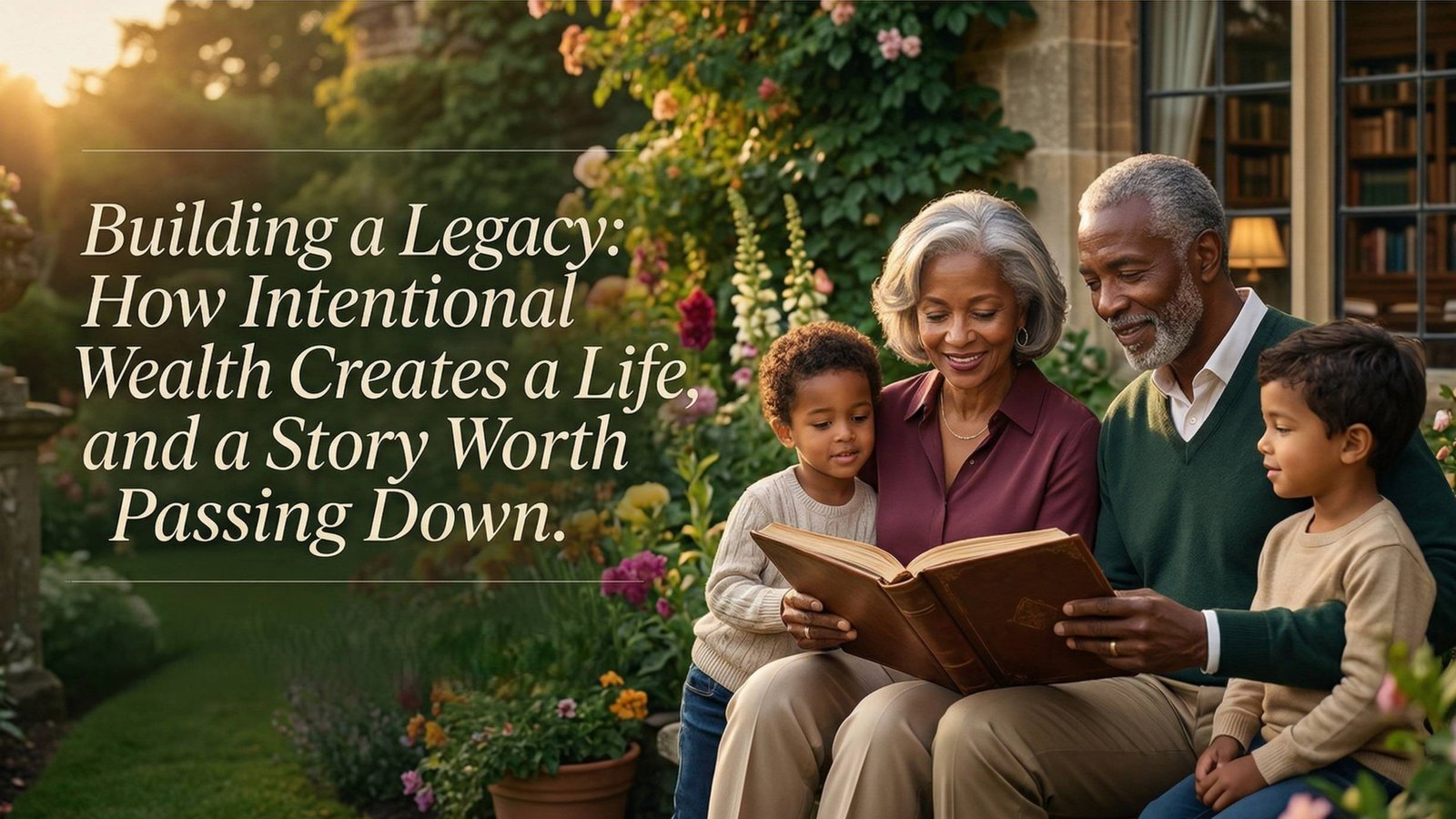
Building a Legacy: How Intentional Wealth Creates a Story Worth Passing Down
What does it mean to leave a legacy? In the world of financial planning, the term “legacy” is often associated with inheritance, family trusts, or estate plans. When we think of a legacy, we might envision grand monuments, expansive family estates, or prestigious names engraved on university buildings. However, the true essence of legacy goes much deeper than these physical symbols. It encompasses the lasting impact we have on the lives we touch and the values we instill in future generations.
Legacy is defined not only by the assets we accumulate but also by how those assets are utilized—how they benefit others and the stories they create. If we focus solely on amassing wealth, we are only halfway to our goal. The real objective is to define the purpose of that wealth. This distinction separates merely building a fortune from leaving a meaningful legacy.
Defining Success: Beyond the Balance Sheet
We often find clarity on modern issues through timeless wisdom. In 1904, Bessie Anderson Stanley wrote a defining poem titled “Success” for an essay contest. While often misattributed to Ralph Waldo Emerson, her words offer the perfect foundation for anyone seeking to leave a meaningful legacy.
Stanley defined success, in part, as:
“To laugh often and much: To win the respect of intelligent people and the affection of children, to earn the appreciation of honest critics and endure the betrayal of false friends; to appreciate beauty, to find the best in others, to leave the world a bit better whether by a healthy child, a garden patch, or a redeemed social condition; to know even one life has breathed easier because we lived. This is to have succeeded.”
Her definition of success is not about what we take from the world, but what we leave behind. It stays with me and has become the foundation for how I define legacy, eventually becoming part of the WISE360 philosophy.
Learn more about What Does True Wealth Really Mean?
The Core of Intentional Wealth
If legacy defines the what and the who, wealth defines the how. However, wealth itself is neutral. It is fuel. Without a destination, wealth can accumulate without purpose.
Intentional Wealth is the deliberate, strategic alignment of our financial resources with our deepest values. It turns money from a mere scorecard into a powerful tool for shaping our life story. While raw accumulated wealth focuses on quantity (“How much do I have?”), intentional wealth emphasizes quality (“What story is my money telling?”). Intentional wealth shifts financial planning from basic legacy goals to specific qualitative impacts.
Creating a Life, and a Story Worth Passing Down
A truly meaningful legacy requires purpose at every stage. When we manage our resources with the perspective of intentional wealth, we actively shape a story that our heirs, our community, and the world will appreciate. Here’s how that narrative is created:
1. Stewardship, Not Ownership: The “Garden Patch” Principle
Stanley talks about leaving the world better, “whether by a healthy child, a garden patch, or a redeemed social condition.” This is the essence of stewardship. When we see our assets as a “garden” we’ve been given to care for, we handle them differently.
We ensure the soil remains fertile for future generations. Intentional wealth involves passing down not just the garden, but also the knowledge and responsibility of gardening. A story worth passing down is one in which children learn the value of work, stewardship, and making their own contributions, rather than inheriting a harvest they didn’t plant.
2. Amplifying Our Impact: Making “One Life Breathe Easier.”
The most beautiful part of Stanley’s definition of success is the scale. It is personal. We don’t need to save the whole world to succeed; we just need to make sure that “one life has breathed easier.”
Wealth enhances our ability to do this. Intentional wealth enables us to make focused, strategic interventions that can significantly impact a life, a community, or a cause. When we create a charitable trust with a clear mission, fund a specific scholarship, or provide seed capital for a mission-driven business, our wealth transforms into a human story of support, opportunity, and hope.
3. Earning Respect, Not Attention
“To win the respect of intelligent people and the affection of children.” This part of Stanley’s poem reminds us that character is the ultimate measure of a legacy. Wealth can buy attention and influence, but it cannot buy respect.
Intentional wealth is used to create meaningful things. It supports honest critique and withstands the test of time and integrity. Our legacy is shaped by how we manage our wealth—our ethics, generosity, and dedication to causes larger than ourselves.
Converting Capital into Narrative: Our Legacy Action Plan
To shift from accumulation to intentionality, we need to turn our different types of capital into a cohesive story.
- Convert Financial Capital into Social Good: Allocate specific parts of our wealth to address issues we care about. (e.g., funding local conservation to create that “garden patch”).
- Transform Intellectual Capital into Mentorship: The “respect of intelligent people” is earned by sharing knowledge. Plan how we will pass down our skills and experience.
- Transform Family Capital into Tradition and Values: Establish traditions and rituals (the “affection of children”) that highlight generosity and community involvement, not just consumption.
Conclusion
Our bank statement is a useful financial snapshot, but our real story is written in the lives we touch and the conditions we improve. Intentional wealth is the conscious act of crafting that story. Bessie Anderson Stanley defined success as leaving the world better than she found it. By adopting a philosophy of intentional wealth, we ensure our legacy is not just about the fortune we accumulated, but about the better world our lives and resources help create. This is how we build a life and a story worth passing down. We aim to live purposefully for ourselves and also to create a better world around us when we find it.