How to Spot Fake Police Calls: A Guide to Avoid Scams in 2026
The Call Every Law-Abiding Citizen Fears
Imagine looking at your phone and seeing a missed call from your local Sheriff’s department. You verify the number online, and it’s legitimate. Then you listen to the voicemail: it’s a high-ranking officer—a Sergeant or Lieutenant—using a real name you can find on the department’s staff directory.
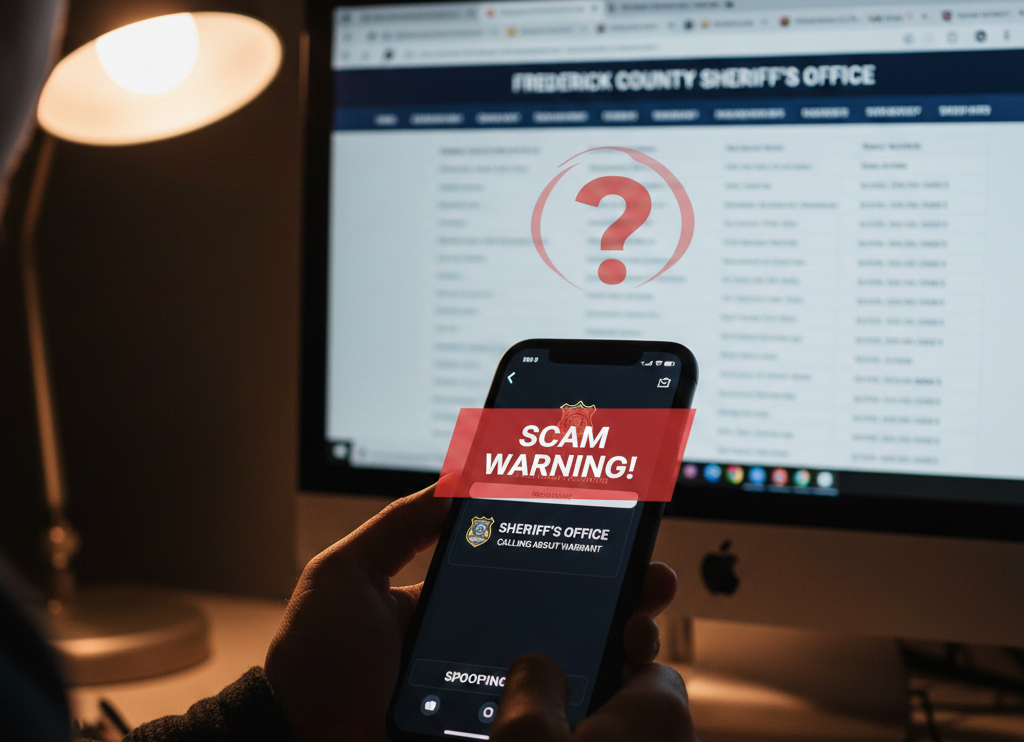
That’s exactly what happened to me this week. I received a series of urgent calls from what appeared to be the Frederick County Sheriff’s Office (FCSO).
The Twist: Using Old Data to Create New Fear
What made this call terrifying wasn’t just the number—it was the detail. The “officer” addressed me by a nickname and a former married name I haven’t used in years.
For a split second, I thought: “If this is a scammer, how do they know a nickname I only used when I lived in that county ten years ago?”
The Truth: Scammers buy “lead lists” from old data breaches. They use historical data to make the call feel like it’s coming from a “permanent record.” If you are being addressed by an old name or nickname, it’s actually a red flag, not proof of identity.
What is Caller ID Spoofing? (And How It Works in 2026)
You might ask: “How can my phone show the real police station number if it’s a scam?”
This is called Caller ID Spoofing. Using Voice over IP (VoIP) software, criminals can mask their true location and “push” any phone number they want onto your screen. Even in 2026, with advanced carrier filters, sophisticated “spoofing” can still bypass your phone’s spam protection.
The 3-Step Verification Protocol That Saved Me
If you receive a suspicious call from law enforcement, do not panic. Follow the protocol I used to expose the fraud:
- Hang Up and Do Not Redial: Never use the “Call Back” feature on your phone. If you redial a spoofed number, you might be routed back to the scammer.
- Find the Verified Non-Emergency Line: Go to the official website for that county (for Frederick County Maryland, it was https://www.frederickcosheriff.com) Manually dial the main administrative number (for Frederick County, it was 301-600-1046).
- Ask for the Officer’s Extension: I asked the front desk to speak with the officer who left the voice mail. When I was connected to the real officer, he confirmed he had never called me.
I alerted the real officer, and he was able to document the impersonation attempt to warn others.
Summary: 3 Signs Your “Police Call” is a Scam
| Sign | Real Police Behavior | Scammer Behavior |
| Payment | Will never ask for money over the phone. | Demands “fines” via Zelle, Bitcoin, or Gift Cards. |
| Urgency | Follows due process; gives time for legal counsel. | Threatens “immediate arrest” if you hang up. |
| Contact | Shows up at your door for warrants. | Stays on the phone for hours to “settle” the case. |
Final Thought: Trust Your Gut, Not Your Screen
Scammers rely on the “Authority Shadow”—the fear we feel when a Sergeant calls. But remember: An official phone number is not an official identity. If you’ve been targeted, report it at ReportFraud.ftc.gov to help protect seniors and vulnerable neighbors who might not be as “scam-savvy” as you.
Scams like this thrive on making you feel financially vulnerable. While verifying the caller is the first step, having a solid foundation of financial security through an emergency fund is what gives you the confidence to breathe through the panic.