Training for the Via Francigena: Best Long-Distance Hiking Trails in Northern Virginia
Preparing for a long pilgrimage like the Via Francigena requires more than just good shoes—it takes steady training, conditioning, and practice walking on tired legs. For the past three months, my husband and I have been following a “back-to-back training” routine: a long walk on Saturday (10+ miles with backpacks), followed by another, shorter long walk on Sunday.
This approach helps us simulate the physical demands of walking day after day on pilgrimage, and we’ve been lucky to explore some of the best trails Northern Virginia has to offer. If you’re looking for places to train for long hikes—or simply want a challenging, scenic day out—here are four trails and parks we’ve come to know well.
1. Bull Run Occoquan Trail (NOVA Parks)
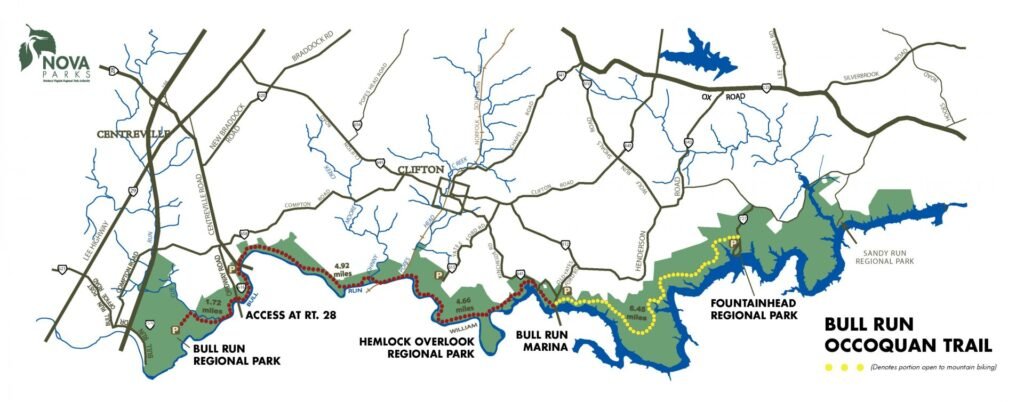
The Bull Run Occoquan Trail is the longest natural surface trail in NOVA Parks and was the site of our very first 10-mile training hike. We loved it so much we returned for a 13-mile day.
Why it’s great for training:
- This is a moderately strenuous trail, with plenty of steep wooded hills to test your endurance.
- The trail is nicely shaded, making it ideal for hot Virginia summers.
- It’s a back-and-forth trail (not a loop), so plan your distance carefully—you’ll need to turn around at the halfway point.
We wrote a detailed blog about our first hike there, which you can read here.
If you’re training for a long trek, this trail will give you both the elevation changes and mental push you need to keep going.
2. Prince William Forest Park (National Park Service)
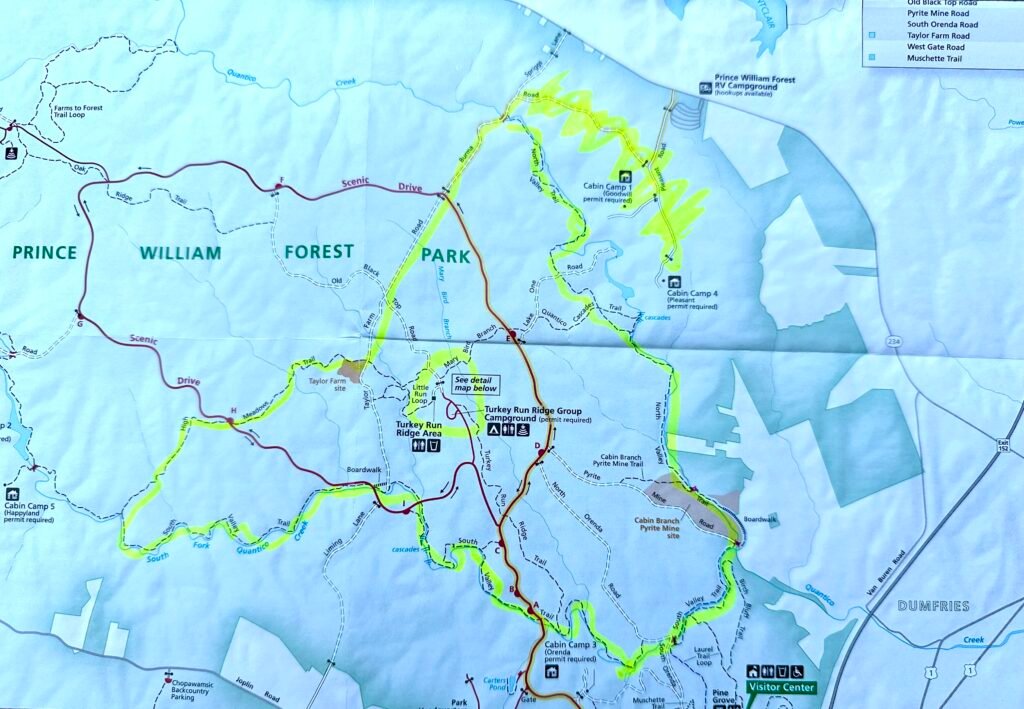
Prince William Forest Park quickly became a favorite. We hiked here twice: first for 15 miles, then stretching ourselves to 18 miles. Both times, we started from the Visitor Center parking lot, where the rangers were extremely helpful in suggesting routes to match our desired mileage.
Route #1: 15 miles
- Visitor Center → South Valley Trail
- Right onto High Meadows Trail
- Stopped at Turkey Run Ridge Group Campground to refill water
- Continued via Taylor Farm Road → Old Black Top Road → Burma Road → North Valley Trail
- Returned to South Valley Trailhead → Laurel Trail → back to parking lot
Route #2: 18 miles
- Visitor Center → South Valley Trail (completed end to end)
- Continued on Oak Ridge Trail
- Lunch + water refill at Oak Ridge Campground
- Back via Old Black Top Road → Turkey Run Ridge Campground → Turkey Run Ridge Trail → South Valley Trail → Laurel Trail → parking
Why it’s great for training:
- Loop options mean you don’t need to retrace your steps.
- Well-shaded forest trails make long hours more comfortable.
- Multiple water refill and restroom stops at Turkey Run Ridge and Oak Ridge campgrounds.
- A sensory highlight: in late summer, we discovered pawpaw fruit along South Valley Trail—the mango-like aroma was unforgettable!
This park is a gem for anyone preparing for endurance walking because it offers variety, shade, and facilities at logical rest points.
On a lighter note, we were captivated by the fungi throughout the forest —so much so that I created a mushroom slideshow video to share. They reminded me that life doesn’t end, it transforms. A comforting thought on a trail with such profound history.
3. Lake Accotink & Gerry Connolly Cross County Trail
After our most demanding Saturday hikes, we turn to Lake Accotink and the Cross County Trail on Sundays. These trails are relatively flat, easy, and perfect for recovery miles.
Our typical walk:
- 6–8 miles, depending on how fatigued we are from the day before
- Trails are shaded by trees and connect seamlessly for as long a route as you’d like
Why it’s great for training:
- A chance to practice “walking on tired legs” without over-exertion
- Easy navigation and pleasant scenery around the lake
- Ideal for families, beginner hikers, or those looking for a more relaxed pace
4. Manassas National Battlefield Park
We logged a 12-mile hike at Manassas National Battlefield by combining its two largest loop trails:
- First Manassas Trail (“Blue Trail”) – 5.4 miles
- Second Manassas Trail (“Red Trail”) – 6.6 miles
Both start and finish at the Henry Hill Visitor Center, which makes for a perfect midway rest point.
Why it’s great for training:
- Trails are relatively flat and easy, good for steady pacing.
- Parking and rest facilities at the Visitor Center make logistics simple.
- A sense of living history—these grounds are steeped in memory and sacrifice, which weighed heavily on us as we walked.
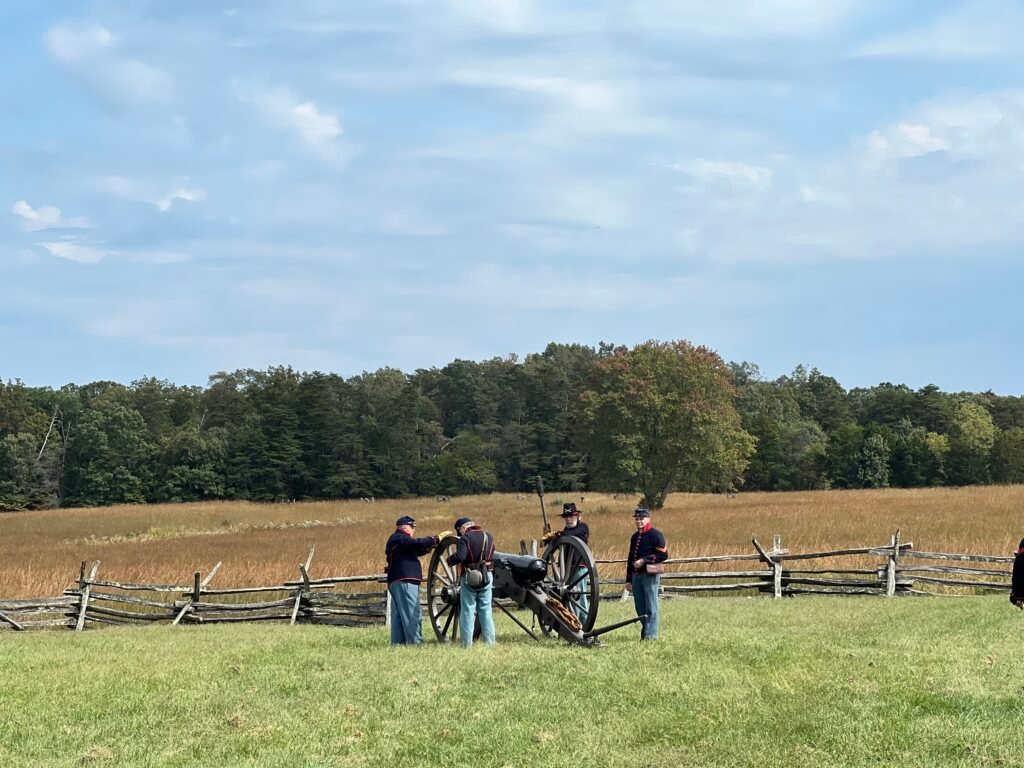
One of the most memorable moments came when we encountered a Civil War reenactment on the battlefield. We were able to watch—and record—a demonstration of a cannon being fired. It was surreal to imagine the echoes of history in the same fields we were walking for training. That experience brought a different dimension to our hike, reminding us that these trails carry not only natural beauty but also powerful stories.
The main challenge here is not physical but environmental: large portions of trail are open field with no shade, so plan for sun protection and hydration.
Tips for Hikers
Whether you’re training for a long-distance pilgrimage like the Via Francigena or just enjoying a day hike in Northern Virginia, a few simple practices can make your walk safer and more enjoyable:
- Stay on the trail. Most trails are well-marked with color-coded blazes on trees or posts—pay attention so you don’t accidentally veer off course.
- Stay hydrated. Carry enough water, and know where refill stations or campgrounds are located along your route.
- Pack smart. Bring snacks, sunscreen, a hat, and a basic first aid kit. Trekking poles are helpful on steep or uneven trails.
- Respect nature. Leave no trace, and resist the temptation to pick plants or forage unless you’re absolutely sure it’s safe.
- Pace yourself. Endurance walking is about consistency, not speed. Listen to your body and take breaks when needed.
- Check the weather. Many trails, especially open fields like Manassas Battlefield, can be tough without shade in summer heat.
- Safety first. Let someone know your hiking plan, especially on longer routes, and always carry a charged phone.
These small steps can make a big difference in ensuring your hike is not only physically rewarding but also enjoyable and safe.
Final Thoughts
Training for the Via Francigena has been as much about discovering ourselves as it has been about discovering new trails. Each hike taught us something different: the mental grit of Bull Run–Occoquan, the looped endurance of Prince William Forest, the gentle recovery at Lake Accotink, and the historical weight of Manassas Battlefield.
If you’re preparing for a long pilgrimage, a thru-hike, or even just want to challenge yourself with extended day hikes, these Northern Virginia trails offer variety, challenge, and beauty in equal measure.
Happy hiking—and may your journey, whether on the Via Francigena or closer to home, be one of discovery and renewal.
At WISE360, we believe money is more than numbers — it’s a tool to help you live fully, navigate life’s transitions, and create wealth that goes beyond money. We offer practical financial tools, empowering financial literacy resources, and inspirational WISE360 Lifestyle merch to make mindful money practices part of everyday life.
Want to bring these insights into your own journey? Join the WISE Circle — our free community where mindful money, financial confidence, and purposeful living come together.